Japanese Tea Garden AI Video Prompts: Create Calm, Beautiful Zen Videos in Minutes
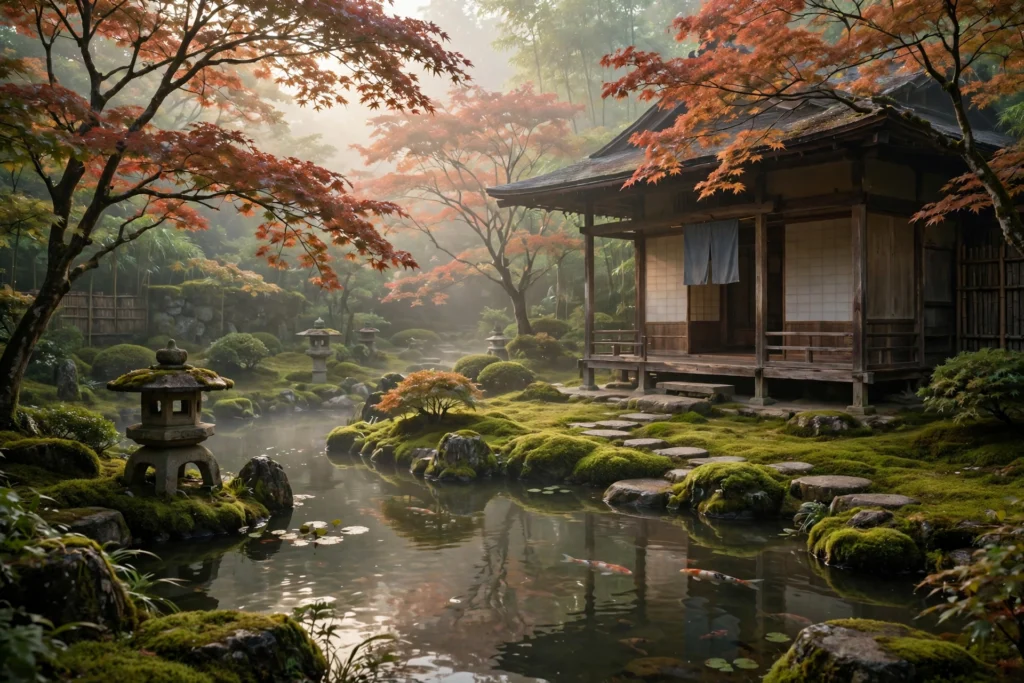
A wooden tea house beside a still pond, steam rising from a bowl of matcha, koi drifting under a red bridge — a Japanese tea garden is one of the most peaceful places on Earth. With the right Japanese tea garden AI video prompts, you can recreate that calm in a 10-second clip, no flight to Kyoto required. Tools like Veo 3, Kling, Runway, and Sora render Japanese gardens beautifully, because the scenes are simple, slow, and full of clear visual anchors: stone lanterns, moss, maple trees, bamboo, and water.
In this post, you will get four copy-paste-ready Japanese tea garden AI video prompts, each built around a different moment: a traditional matcha ceremony, a koi pond with a red bridge, a sunlit bamboo grove, and an autumn maple garden. Every prompt includes camera movement, lighting, and mood, so your video feels like a quiet morning in Kyoto — not a slideshow.
Zen and slow-living content is quietly one of the strongest niches on short-form video. In a feed full of noise, a calm garden clip is a deep breath — and people save calm content. Tea garden videos get saved to “peaceful” collections, shared with friends who love Japan, and replayed as background calm. That save-and-share behaviour is exactly what the algorithms reward, which makes these prompts a smart investment for any creator building a relaxation, travel, or Japan-focused channel.
Table of Contents
- Why Japanese Tea Garden Videos Go Viral
- How to Use These Japanese Tea Garden AI Video Prompts
- Prompt 1: Matcha Tea Ceremony
- Prompt 2: Koi Pond and Red Bridge
- Prompt 3: Bamboo Grove Path
- Prompt 4: Autumn Maple Garden
- Watch Real Kyoto Tea Culture for Inspiration
- Pro Tips for Peaceful Garden AI Videos
- Frequently Asked Questions
- Conclusion
Why Japanese Tea Garden Videos Go Viral
Japan is one of the most searched travel destinations in the world, and the tea garden is its calmest, most photogenic corner. Unlike busy Tokyo street scenes, a tea garden has almost no moving parts — a little water, a little steam, a few leaves. That simplicity is a gift for AI video: the fewer things that move, the fewer things the model can get wrong. The result is a clip that looks genuinely filmed, not generated.
There is also a cultural depth that audiences respect. The Japanese tea ceremony, or chanoyu, is a centuries-old ritual built on mindfulness, precision, and respect for the guest. When your video shows a host whisking matcha with slow, deliberate movements, viewers feel that history — even if they have never been to Japan. Adding one or two accurate details (a bamboo whisk, a ceramic bowl, a tatami mat) makes the scene feel researched and real, which builds trust with your audience.
Finally, tea garden content works across many channels: travel, relaxation, ASMR, study-with-me backgrounds, Japan culture, and even meditation apps. One set of Japanese tea garden AI video prompts can feed all of them, because the same clip works as a Reel, a Short, a loopable background, or the opening shot of a longer Kyoto vlog.
How to Use These Japanese Tea Garden AI Video Prompts
Garden prompts reward slowness. Always use slow camera moves — “slow push-in”, “gentle pan”, “slow drift” — and keep your clips to 8–12 seconds. Set 9:16 vertical (1080 x 1920) for Shorts, Reels, and TikTok, and 16:9 for long-form YouTube. Generate each prompt two or three times and keep the best take, checking hands and faces carefully: the tea ceremony prompt involves a person, and hands are still the hardest thing for AI video to render.
A useful trick is to name the art style when you want a specific feel. The words “inspired by ukiyo-e woodblock prints” push the model toward elegant, flat, artistic colours, while “photorealistic” and “documentary quality” push it toward realism. The AI video innovations guide shows exactly this technique, with a serene tea ceremony in a traditional Japanese garden as its example prompt for the Kling model — proof that the tea garden is a classic test scene for AI video quality.
For Japanese-style scenes in general, the Japanese AI video generator guide is worth reading: it covers garden walks, kimono scenes, and sakura picnics, and explains how to keep human subjects stable and natural in a single continuous shot.
Prompt 1: Matcha Tea Ceremony
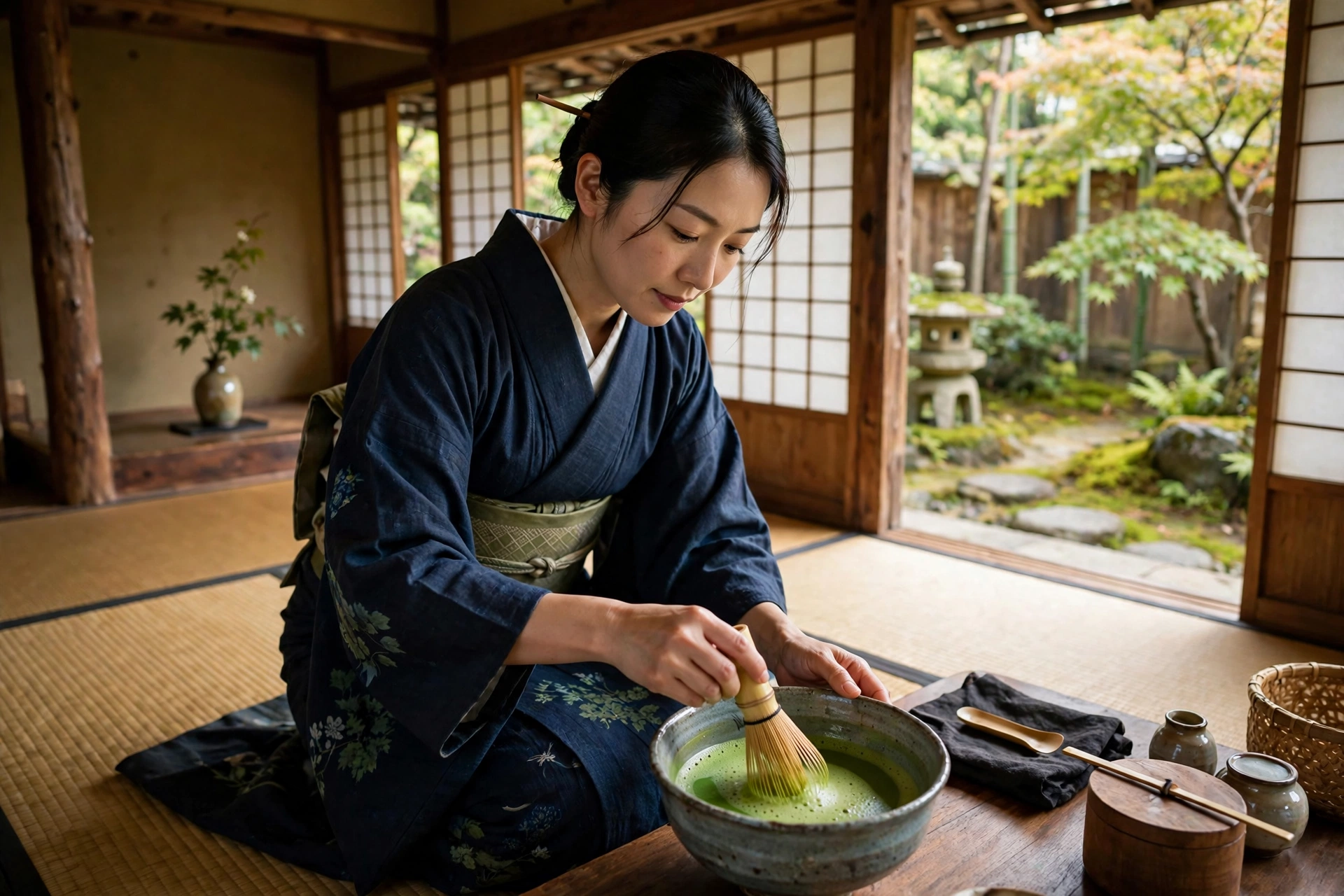
This is the heart of the tea garden: a host in kimono whisking bright green matcha in a ceramic bowl, steam curling up, soft light coming through the tea house window. It is slow, elegant, and deeply calming — perfect for ASMR-style content, “slow living” Reels, and Japan culture channels. Use it as your series opener, because it immediately tells the viewer: this video is about peace.
Serene 10-second cinematic video of a traditional Japanese tea ceremony inside a wooden tea house in a Kyoto tea garden. A host in an elegant kimono whisking bright green matcha tea in a ceramic bowl with a bamboo whisk, gentle steam rising, soft morning light through paper windows, tatami mats and a view of the moss garden behind. Slow push-in camera, calm and mindful mood, soft natural colours, photorealistic, 4K quality. 9:16 aspect ratio, 10 seconds, no text, no watermark.Image-prompt idea: “Traditional Japanese tea ceremony, host in kimono whisking green matcha in a ceramic bowl, soft window light, tatami mats, garden view, photorealistic.”
Why it works: The prompt gives the model one person, one action (whisking), and one camera move (slow push-in). The steam and soft light add atmosphere without adding complexity. Check the hands in your generation — if they look wrong, regenerate with the words “hands resting calmly, simple movements” or crop tighter on the bowl itself. The ceremony is also a beautiful companion to our cherry blossom spring park AI video prompts, which capture the same Kyoto in its most colourful season.
Prompt 2: Koi Pond and Red Bridge
The red bridge over the koi pond is the most photographed spot in any Japanese garden — and the most satisfying to animate. This prompt creates a gentle scene of orange and white koi drifting under an arched bridge, with maple leaves and stone lanterns framing the water. It is perfect for relaxation loops, “watch until the end” posts, and nature channels.
Peaceful 10-second cinematic video of an arched red wooden bridge over a still koi pond in a Japanese tea garden in Kyoto. Orange and white koi fish glide slowly beneath the bridge, stone lanterns and maple trees frame the water, and soft morning light creates gentle reflections on the pond surface. Slow drifting camera across the water, tranquil zen mood, rich green and warm red tones, photorealistic, 4K quality. 9:16 aspect ratio, 10 seconds, no text, no watermark.Image-prompt idea: “Arched red wooden bridge over a koi pond in a Japanese tea garden, orange and white koi fish, stone lanterns, maple trees, morning light, photorealistic.”
Why it works: Water reflections and slow fish are both things AI video handles well, and the bridge gives the scene a strong, stable structure. The red bridge against green moss is also a colour contrast that stops the scroll instantly. If you want to understand the real place behind the scene, the guided tea tour in Wazuka, Kyoto shows how tea fields, tea houses, and tasting sessions fit together in the home of Uji tea — real context that makes your captions and voiceovers sound informed.

Prompt 3: Bamboo Grove Path
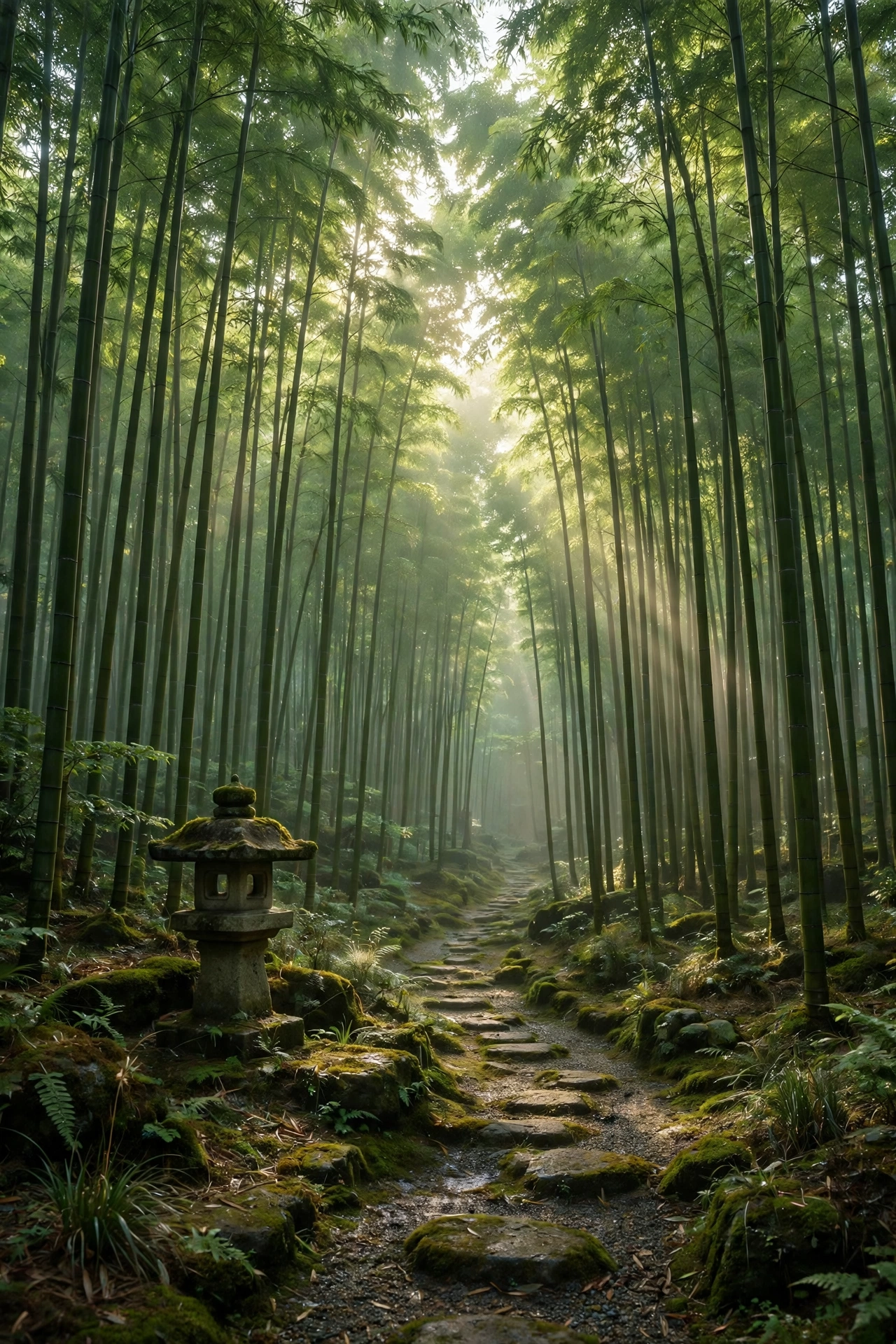
Walking through a bamboo grove feels like entering another world: tall green stalks on both sides, sunlight falling in stripes, and a hush that seems to absorb all sound. This prompt creates that feeling in ten seconds — a slow walk down a stone path with light filtering through the bamboo. It is ideal for meditation content, walking-tour Shorts, and “escape the city” Reels.
Tranquil 10-second cinematic video of a stone path through a towering green bamboo grove in a Japanese tea garden. Sunlight filters through tall bamboo stalks in soft stripes, a moss-covered stone lantern stands beside the path, and gentle morning mist drifts between the stalks. Slow forward camera movement down the path, as if walking, peaceful and immersive mood, fresh green tones, photorealistic, 4K quality. 9:16 aspect ratio, 10 seconds, no text, no watermark.Image-prompt idea: “Stone path through a towering green bamboo grove, sunlight filtering through bamboo, stone lantern, morning mist, photorealistic.”
Why it works: A forward walk is one of the most natural camera moves for AI video, because the model only needs to move the world past the camera. The vertical bamboo lines also give the scene strong geometry, which keeps the generation stable from frame to frame. This is a great “breather” clip to place between busier videos in a series. For a similar calm-in-nature feeling with a different season, see our autumn fall foliage AI video prompts.
Prompt 4: Autumn Maple Garden
In November, Kyoto’s tea gardens explode into red and orange as the maple leaves turn. This prompt captures that peak moment: a small pagoda framed by brilliant maples, fallen leaves floating on a still pond, and soft golden light. It is the most colourful prompt in this set — perfect for autumn content, seasonal Shorts, and anyone building a “Japan in every season” series.
Stunning 10-second cinematic video of a Japanese tea garden in autumn, Kyoto. Brilliant red and orange maple leaves frame a small wooden pagoda and a moss garden, fallen leaves float gently on a still pond, and soft golden afternoon light glows through the trees. Slow pan across the garden, warm and nostalgic mood, rich autumn colours, photorealistic, 4K quality. 9:16 aspect ratio, 10 seconds, no text, no watermark.Image-prompt idea: “Japanese tea garden in autumn, red and orange maple leaves framing a small pagoda, fallen leaves on a still pond, golden light, photorealistic.”
Why it works: Autumn colour is a scroll-stopper, and the slow pan keeps the scene stable while showing off the whole garden. The floating leaves add gentle motion without asking the model to animate anything complex. Post this one in October or November, when autumn content peaks, and pair it with a quiet piano track. For a cosy indoor contrast to this outdoor scene, our cozy library reading nook AI video prompts use the same warm-light, slow-pacing techniques inside.

Watch Real Kyoto Tea Culture for Inspiration
Before you generate, watch how real Kyoto tea culture looks and moves. Notice the slow, deliberate pace of the tea fields, the green rows of Uji tea, and the quiet rhythm of rural Japan. That unhurried pacing is what your prompts should copy — slow camera, soft light, one thing at a time. This peaceful tour of Wazuka, the home of Uji tea, is the perfect reference:
Pro Tips for Peaceful Garden AI Videos
First, keep the motion slow and the scene simple. One subject, one camera move, one light source — that rule matters even more in a zen garden than anywhere else, because the whole point is calm. Fast cuts and busy scenes destroy the mood you are trying to create. Second, add texture words: “morning mist”, “moss”, “steam rising”, “fallen leaves floating”. These small details are what make a flat image feel like a living place.
Third, be careful with people. Hands, faces, and kimono folds are the hardest parts for AI video, so use people sparingly — one host in the ceremony prompt, and no people at all in the other three. And finally, keep your audio minimal: soft piano, gentle water sounds, or nothing at all. Silence is part of the zen aesthetic, and a quiet clip stands out in a loud feed.
Frequently Asked Questions
Which AI video tool works best for Japanese tea garden scenes?
Kling is excellent for calm, precise scenes like a tea ceremony, because it follows prompts closely and keeps human movement stable. Veo 3 gives the most realistic light and water, Runway Gen-4 offers the best camera control, and Sora produces very cinematic wide garden shots. Try the same prompt in two tools and keep the better result.
Can I use Japanese tea garden AI video prompts for YouTube Shorts?
Yes. All four prompts are written for 9:16 vertical video at 1080 x 1920, which is the exact format for YouTube Shorts, Instagram Reels, and TikTok. Add soft piano or nature sounds and a caption like “A quiet morning in Kyoto” for best results.
How do I make AI-generated people look natural in a tea ceremony video?
Keep the person mostly still, use a slow camera move, and describe simple actions like “whisking matcha” rather than complex movements. Check the hands in every generation and discard any take with distorted fingers. A tighter crop on the bowl and hands also hides most problems.
Are AI-generated Japanese garden videos allowed on YouTube and Instagram?
Yes. Both platforms allow AI-generated content, but YouTube asks you to mark it with the “altered or synthetic content” disclosure when uploading. Do not claim the footage is real video you filmed in Kyoto — label it honestly as AI-generated.
What is the best season to show in a Japanese tea garden video?
Spring (cherry blossoms) and autumn (red maples) are the most popular, but a tea garden works in every season: fresh green in summer, snow in winter. Match your post to the real season when you can — autumn maple content performs best in October and November.
Can I monetise a channel made with Japanese garden AI videos?
Yes, if you add original value: your own voiceover about tea culture, educational facts about Kyoto, editing, or a series format like “One Japanese garden a week”. Channels that only re-upload raw AI clips with no added creativity struggle with monetisation, so always add your own story or knowledge.
Conclusion
These four Japanese tea garden AI video prompts give you a complete zen series: the mindful matcha ceremony, the peaceful koi pond, the immersive bamboo grove, and the brilliant autumn maples. Copy a prompt, paste it into Kling, Veo 3, Runway, or Sora, and you will have a calming Kyoto clip in under a minute.
The secret is slowness. Post one garden clip a day, keep the same quiet pacing and soft light, and let your audience come to you for calm. In a feed full of noise, a ten-second walk through a bamboo grove is a gift — and a channel that gives calm every day is a channel people return to. Start with the matcha ceremony, and let the garden do the rest.