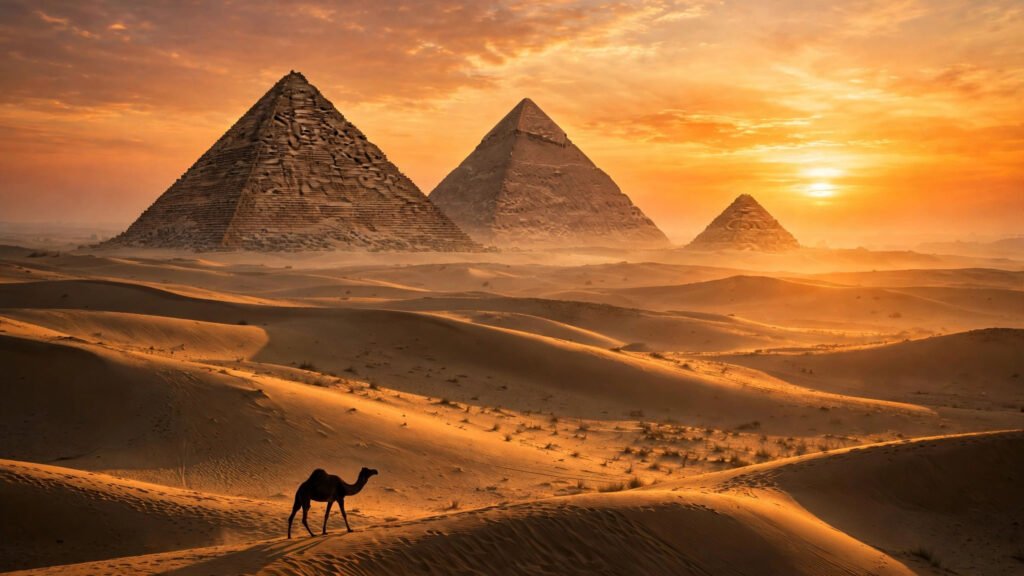
Cairo Pyramids AI video prompts let you film the oldest wonder of the ancient world without leaving your desk. The Great Pyramid of Giza has stood for more than 4,500 years, and it is still the most awe-inspiring thing a camera can point at: three colossal triangles rising out of golden desert, the Sphinx guarding them in silence, and a sky so big it makes everything feel eternal. Modern AI video tools like Google Veo, OpenAI Sora, and Kling have learned these shapes well, which means one careful prompt can now produce a clip that feels like a National Geographic documentary. In this post, you get four copy-paste Cairo Pyramids AI video prompts — golden hour at the Great Pyramid, the Sphinx, a camel caravan at sunset, and the ancient construction itself — each written as a proper shot list with subject, action, camera movement, lens, lighting, and mood.
Table of Contents
- Why the Pyramids Are Perfect for AI Video
- How to Use These Cairo Pyramids AI Video Prompts
- Prompt 1: The Great Pyramid at Golden Hour — Awe from Below
- Prompt 2: The Great Sphinx — Guardian of Giza
- Prompt 3: Camel Caravan at Sunset — Desert Journey
- Prompt 4: Building the Pyramid — Ancient Egypt Reborn
- Watch: Wonders of Egypt in 4K
- Pro Tips for Epic Pyramid AI Videos
- Frequently Asked Questions (FAQ)
- Conclusion
Why the Pyramids Are Perfect for AI Video
The Pyramids of Giza are almost unfairly good subjects for AI video. First, their geometry is pure and simple: triangles against sky. AI models reproduce simple, monumental shapes with far more accuracy than complex architecture, so the pyramids almost always come out looking right. Second, the desert setting is forgiving. Sand, sky, and stone are smooth, continuous textures, which means there is very little fine detail for the model to get wrong — compare that to a crowded city street, where every window and face is a chance to glitch. Third, the scale is cinematic by nature. A tiny human figure beside a 146-metre pyramid creates instant drama, and the long desert shadows at golden hour add depth that makes every frame look like a film still.
There is also the story. The pyramids are not just beautiful; they are mysterious, ancient, and universally recognised. A video of Giza works for travel channels, history channels, documentary-style content, and pure visual inspiration. That is why Cairo Pyramids AI video prompts are among the most shared prompt topics in the AI video community — the subject is timeless, the audience is global, and the results genuinely impress.
How to Use These Cairo Pyramids AI Video Prompts
Paste each prompt exactly as written. The camera direction, lens, and lighting details are what make the difference between a cinematic clip and a flat screensaver. Choose your aspect ratio first: 16:9 for YouTube, 9:16 for Reels and Shorts. If your tool supports image-to-video, use the image prompt idea under each prompt to generate a still first, then animate it — this gives you far more control over the pyramid’s shape and the composition. Keep one subject and one camera move per clip, and build longer videos by stitching four to six clips together with hard cuts. And ground your video in real facts: the Pyramids of Giza visitor guide at sightsale.com explains the new visitor centre, ticket prices, and opening hours, which will make your voiceover or captions feel researched instead of invented.
Prompt 1: The Great Pyramid at Golden Hour — Awe from Below
The Prompt (copy-paste ready)
“Low-angle cinematic shot looking up at the Great Pyramid of Giza, Egypt, in golden-hour light. Massive limestone blocks glow warm as a lone traveler walks slowly toward the pyramid across rippled desert sand. The camera tilts up very slowly, revealing the pyramid’s full height against a deep blue sky. 35mm lens feel, warm golden colour grade, epic scale, awe-inspiring mood, photorealistic, 4K, 16:9. Ambient sound: soft desert wind, footsteps on sand, distant silence.”
Why This Prompt Works
This prompt works because it uses the oldest trick in cinematography: make the subject huge by putting the camera low and a human small. The slow tilt-up is one of the safest camera moves in AI video — smooth, vertical, and continuous — and it forces the viewer to feel the pyramid’s scale in real time. Golden-hour light is essential here: it warms the limestone, lengthens the shadows, and turns a pile of stone into something almost sacred. The lone traveler is the key detail — without a human figure for scale, even the Great Pyramid can look like a small model. Keep the traveler small and distant, and the pyramid will feel truly monumental.
Image Prompt Idea
“Low-angle view looking up at the Great Pyramid of Giza, massive limestone blocks glowing in golden-hour light, a traveler walking toward it across desert sand, deep blue sky, cinematic photorealistic, 16:9.”

Prompt 2: The Great Sphinx — Guardian of Giza
The Prompt (copy-paste ready)
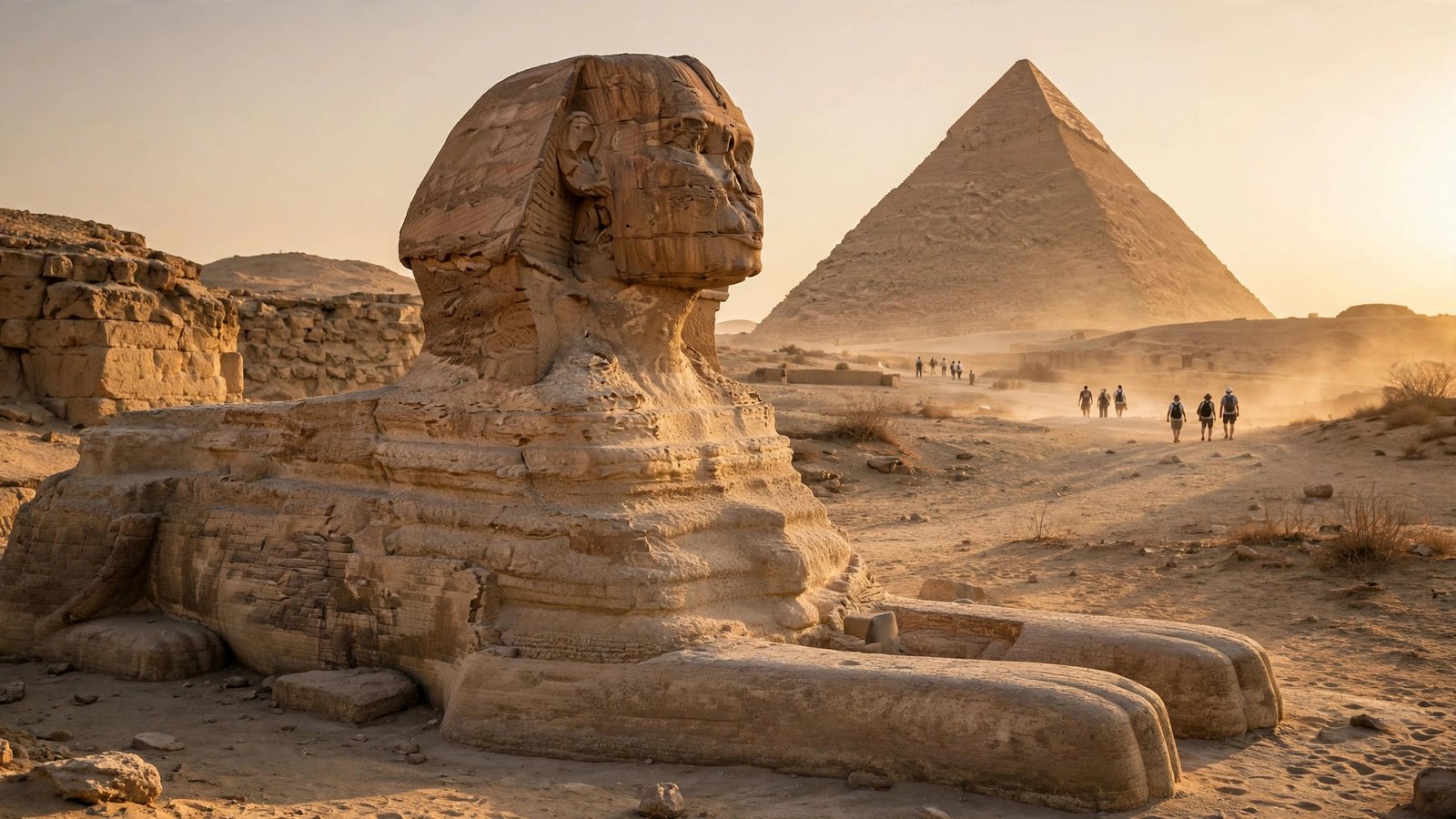
“Slow cinematic orbit around the Great Sphinx of Giza, Egypt, in warm late-afternoon light. The weathered lion body and calm human face are shown in profile as the camera circles gently, with the Pyramid of Khafre rising behind it. Desert sand glows gold and a few visitors stand far in the distance. Slow orbital camera movement, 50mm lens feel, shallow depth of field, warm amber colour grade, mysterious and timeless mood, photorealistic, 4K, 16:9. Ambient sound: desert wind, faint footsteps, stillness.”
Why This Prompt Works
The Sphinx is the most mysterious face in the world, and this prompt treats it with the patience it deserves. The slow orbit is a beautiful move for AI video because the subject stays centred while the background shifts — the model only has to keep one object stable, which it does well. The late-afternoon light rakes across the weathered stone and brings out every crack and contour, which is exactly what makes the Sphinx feel ancient rather than new. The distant visitors are important: they prove the scale and remind the viewer that this is a real place you can visit. Use this clip as the thoughtful, quiet heart of your pyramid video — the moment where the music softens and the audience just looks.
Image Prompt Idea
“The Great Sphinx of Giza in warm late-afternoon light, weathered lion body and human face in profile, the pyramid of Khafre rising behind it, desert sand and a few visitors in the distance, cinematic photorealistic, 16:9.”
Prompt 3: Camel Caravan at Sunset — Desert Journey
The Prompt (copy-paste ready)
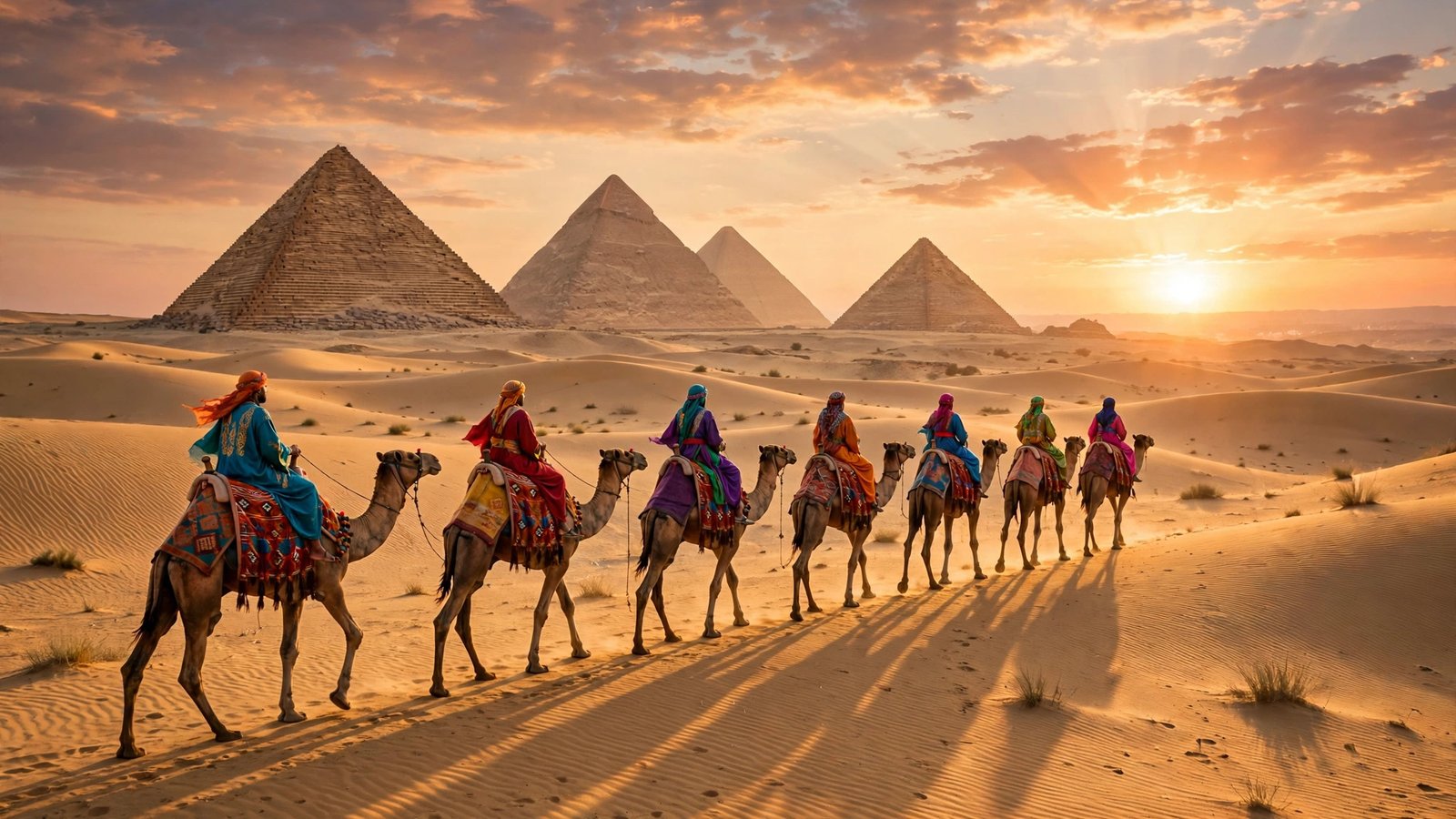
“Epic wide cinematic shot of a camel caravan crossing golden desert dunes toward the Pyramids of Giza at sunset, Egypt. Riders in colourful robes sway gently as the camels walk in a line, their long shadows stretching across the sand. The pyramids glow orange in the distance under a burning sky. Slow lateral tracking shot, wide-angle lens, rich orange and gold colour grade, adventurous and romantic mood, photorealistic, 4K, 16:9. Ambient sound: camel bells, soft wind, sand shifting.”
Why This Prompt Works
This is the postcard shot — the image everyone pictures when they hear the word “Egypt” — and the prompt is built to deliver it. The lateral tracking shot keeps the caravan and the pyramids in frame together, which gives the scene its story: a journey toward something ancient and huge. Camels are forgiving subjects for AI video because their slow, rhythmic walk is easy to animate, and the riders’ colourful robes add moving spots of colour against the gold desert. The sunset sky does the emotional work, and the long shadows add the depth that makes the desert feel three-dimensional. This is your most shareable clip — it works as a thumbnail, a Reel, or the opening of a travel film.
Image Prompt Idea
“Camel caravan crossing golden desert dunes toward the Pyramids of Giza at sunset, riders in colorful robes, long shadows, warm orange sky, epic cinematic photorealistic, 16:9.”
Prompt 4: Building the Pyramid — Ancient Egypt Reborn
The Prompt (copy-paste ready)
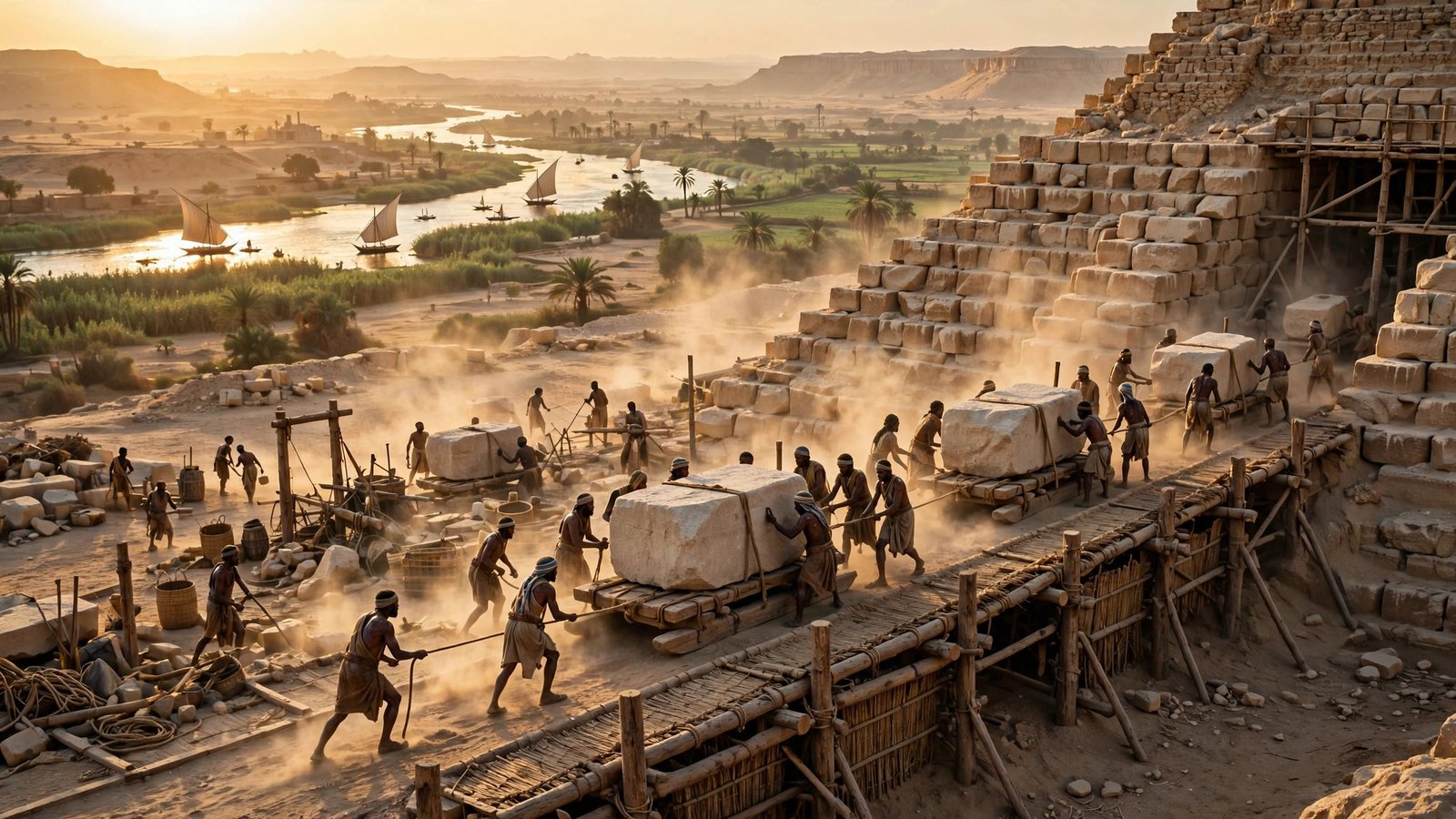
“Epic historical cinematic scene of ancient Egypt: hundreds of workers hauling massive limestone blocks on wooden sleds up a ramp beside a half-built pyramid, Giza, around 2580 BC. Dust hangs in golden sunlight, overseers direct the work, and the Nile River glints in the far distance. Slow crane shot rising to reveal the full scale of the construction site. Wide-angle lens, warm dusty colour grade, monumental and awe-inspiring mood, photorealistic documentary style, 4K, 16:9. Ambient sound: ropes creaking, distant shouts, drums, wind.”
Why This Prompt Works
This prompt is different from the other three: it does not show the pyramids as they are, but as they were made. That is exactly what makes it powerful — it turns a travel video into a history documentary. The rising crane shot is perfect for this scene because it starts with the human effort (the workers, the ropes, the sleds) and ends with the impossible scale of the result. AI models handle this kind of epic crowd scene surprisingly well when the camera moves slowly and the action is simple and repetitive: hauling, walking, lifting. The dust in the golden light is a gift — it softens edges, adds atmosphere, and hides small imperfections. Use this clip when your video needs a “wow, humans really did this” moment.
Image Prompt Idea
“Ancient Egypt, workers hauling massive limestone blocks on wooden sleds up a ramp beside a half-built pyramid, dust in golden sunlight, Nile river in the distance, epic historical cinematic scene, photorealistic, 16:9.”
Watch: Wonders of Egypt in 4K
Before you generate your own clips, watch this cinematic 4K journey through Egypt — from the timeless pyramids and ancient temples to the Nile Valley, the vast deserts, and the historic cities shaped by thousands of years of civilisation. Study how the camera frames the pyramids against the sky, how the light changes across the desert, and how the film builds a sense of wonder without rushing. Then use the four prompts above to create your own version of that feeling.
Pro Tips for Epic Pyramid AI Videos
Always shoot the pyramids at golden hour or sunset in your prompts — the warm light flatters the limestone and the long shadows add depth that flat midday light never gives. Always include a human figure or a camel for scale; without it, the pyramid can look like a miniature. Keep the camera slow: tilt-ups, slow orbits, lateral tracking, and crane rises are the moves AI models do best. Add dust, wind, and haze to your prompts — desert atmosphere is not a flaw, it is the look. And generate two or three takes of each prompt; the best pyramid render is usually the second one, once the model has “warmed up” to the geometry.
For more desert inspiration, our cinematic desert AI video prompts and Dubai desert safari AI video prompts use the same golden-light techniques in different landscapes.
Frequently Asked Questions (FAQ)
1. Which AI video tool is best for Cairo Pyramids AI video prompts?
Google Veo 3 and OpenAI Sora produce the most realistic pyramid scenes, with strong geometry and native audio. Kling is excellent for smooth camera movement like the Sphinx orbit, and Runway Gen-4 works well for the historical construction scene. Try the same prompt in two tools and keep the better take.
2. Can I use these prompts for free?
Yes. All four prompts work in the free tiers of most AI video tools, including trial credits on Veo, Kling, and Runway. Free tiers usually limit clips to 5–10 seconds and may add a watermark, so generate short clips and stitch them together for a longer video.
3. Why do my AI pyramids sometimes look crooked or melted?
Pyramid geometry fails when the camera moves too fast or the prompt asks for too many things at once. Fix it by using one slow camera move, naming the pyramid explicitly (“the Great Pyramid of Giza”), and generating an image first with the image prompt idea, then animating that still with image-to-video.
4. What is the best time of day to show in pyramid prompts?
Golden hour (just after sunrise or just before sunset) is best. The low sun warms the limestone, stretches the shadows, and gives the desert its famous glow. Night prompts with the pyramids lit up also work well, but avoid harsh midday sun — it flattens the scene and exposes generation flaws.
5. Can I make a full Egypt documentary with only AI prompts?
Yes. Combine these four prompts with the travel-vlog style prompts in our other posts, add a real voiceover with facts from the Pyramids of Giza visitor guide at sightsale.com, and cut the clips together with hard cuts and music. The construction prompt gives you the history angle, and the caravan prompt gives you the travel angle — together they cover a complete short documentary.
6. Is it okay to show ancient Egyptians building the pyramids?
Yes, as a historical reconstruction it is one of the most popular uses of AI video. Keep it respectful and factual: workers hauling stone on sleds and ramps is the widely accepted historical understanding, and the ReelMind guide to visualising the Great Pyramid with AI text prompts explains how creators approach this subject. Avoid fantasy elements like aliens or magic — the real story is impressive enough.
Conclusion
The pyramids have survived 4,500 years because they are simple, massive, and unforgettable — and those are exactly the qualities that make them perfect for AI video. Start with the Great Pyramid at golden hour for awe, circle the Sphinx for mystery, ride with the camel caravan for romance, and end with the ancient builders for wonder. Four prompts, four clips, one complete journey from the present day back to 2580 BC. Paste them into Veo, Sora, or Kling today, keep the best takes, and share your version of the last surviving wonder of the ancient world.
Pingback: Marrakech AI Video Prompts: 4 Cinematic Prompts for the Red City
Pingback: Chefchaouen AI Video Prompts: 4 Cinematic Prompts for Morocco's Blue City